
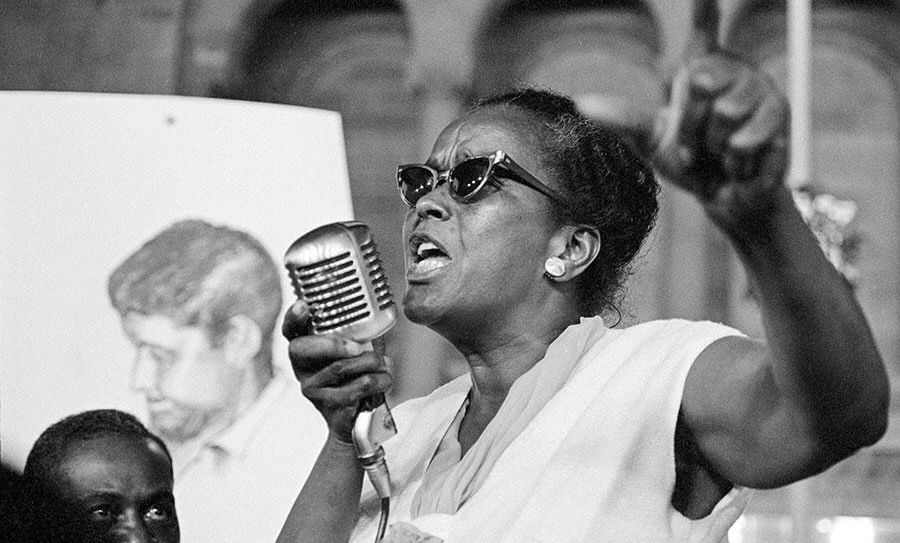
She was small, brown-skinned and dressed in understated ways, hair pulled back away from her face, occasionally a dab of lipstick. But man, she was fierce.
Ella Josephine Baker carved out a new definition of womanhood in a male-dominated civil rights movement, creating a path to democracy from the ground-up, rather than top-down. She detested messiah-mania.
“Give light, and people will find the way,” Baker would say.
That’s the activist and humanist that historian Barbara Ransby wrote about more than 20 years ago in a biography, Ella Baker & The Black Freedom Movement: A Radical Democratic Vision. The second edition, issued in 2024, includes a new foreword by UCLA history professor and distinguished writer Robin D.G. Kelley.

Ransby’s biography is needed for these times as we are called upon to rebuild what’s been lost, but also to make a stronger democracy, grappling with the new threats to health care, education, climate justice, and how we deal with artificial intelligence.
Ransby wrote about the “outsider-within.” Ella Baker worked with powerful men inside key civil rights moments, the NAACP, the Southern Christian Leadership Conference and the Student Nonviolent Coordinating Committee. Just to name a few: Walter White, W.E.B. DuBois, Thurgood Marshall, Dr. Martin Luther King Jr. and Stokley Carmichael.
“She was close to the centers of power within the black community, but she was always a critical and conditional insider, a status informed by her gender, class loyalties, and political ideology. Baker criticized unchecked egos, objected to undemocratic structures, protested unilateral decision making, condemned elitism, and refused to nod in loyal deference to everything ‘the leader’ had to say. These stances often put her on the outside of the inner circle.”
Best known for her work with Student Nonviolent Coordinating Committee (SNCC), but Baker’s journey to her radical democratic vision began at home, where she first learned that women in a community made an impactful difference. Born to Georgianna Ross Baker and Blake Baker on December 13, 1903, in Norfolk, Virginia, Ella was the middle child of three siblings. Her father worked for a steamship company and was away often. Her mother took in boarders to earn money. After a race riot in Norfolk, her family relocated to their maternal grandparents’ home in North Carolina.
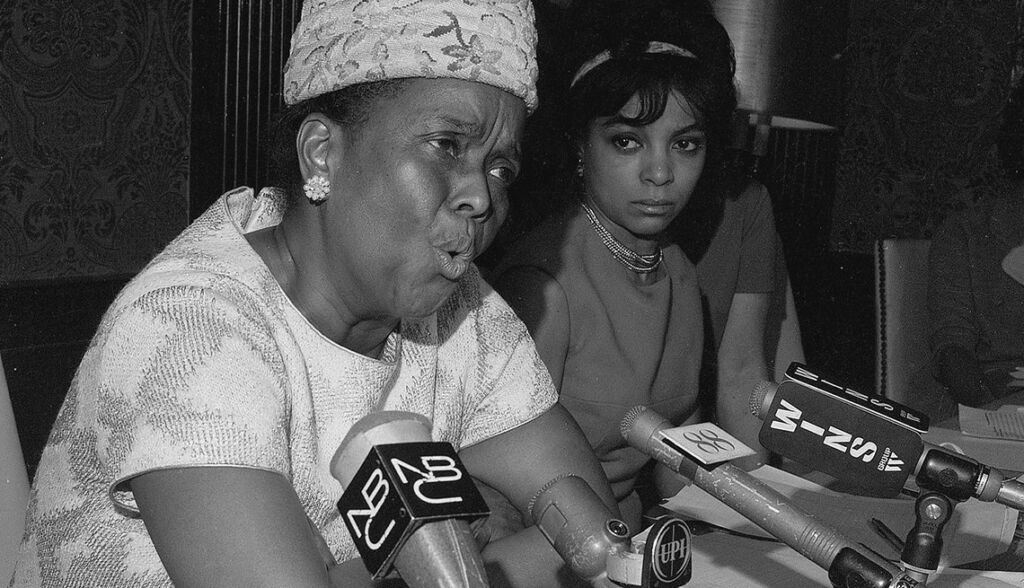
She relished oral history, taking in stories from her grandmother Josephine Elizabeth “Bet” Ross who lived through slavery. Baker’s grandfather, Mitchell, who died when she was young, was a minister and eventually a landowner.
The Baker children were mannerly and church-going. Though not wealthy and aware of their relative status compared with others, the family paid for Ella’s education at Shaw University. She graduated with valedictorian honors and a reputation for speaking her mind.
After college she moved to Harlem, where it was hard to find employment during The Great Depression. She eventually landed at the NAACP in 1938, becoming its highest ranking woman.
Baker worked with NAACP’s legendary leaders, encountering a wall of sexism. She could not operate in a world where women were to be the workers, sometimes seen but never heard. She worked among women who were soldiers including Anna Arnold Hedgeman, Dorothy Height, Pauli Murray and Septima Clark.
Eventually Baker helped launch SNCC. Undeterred by the sexism, she embraced the brilliance and bravery of sharecroppers and workers and found avenues to circumvent the hammers of sexism and racism.
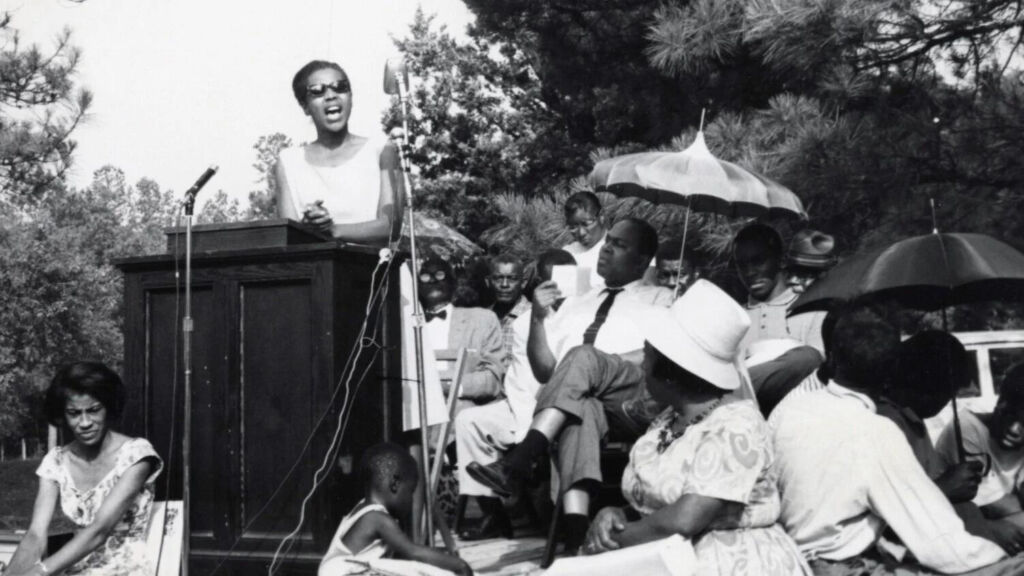
The SCLC helped launch SNCC. Understanding SCLC’s endorsement was pivotal, it was Baker who fought and won autonomy for the young activists. Through SNCC organizing she won long overdue respect that she had spent her entire life earning.
SNCC, composed of young people who dared to register voters in the Mississippi Delta, were the freedom riders and shock troops of the 1960’s civil rights battle. They faced down racist mobs and brutal police officers. They stayed when three civil rights workers were slain in Mississippi. And they stood alongside Fannie Lou Hamer and joined Ella Baker during the rise of the Mississippi Freedom Democratic Party.

Baker was on SCLC’s payroll when she called the young activists together Easter weekend in 1960. King spoke at the conference, praising them for their leadership, but it was Baker who nurtured the students and fought for them to remain independent.
The countless young warriors — black and white — had fire in their hearts and Ella Baker’s hand on their shoulder.
In the trenches for decades, Ella Baker died on her 83rd birthday.
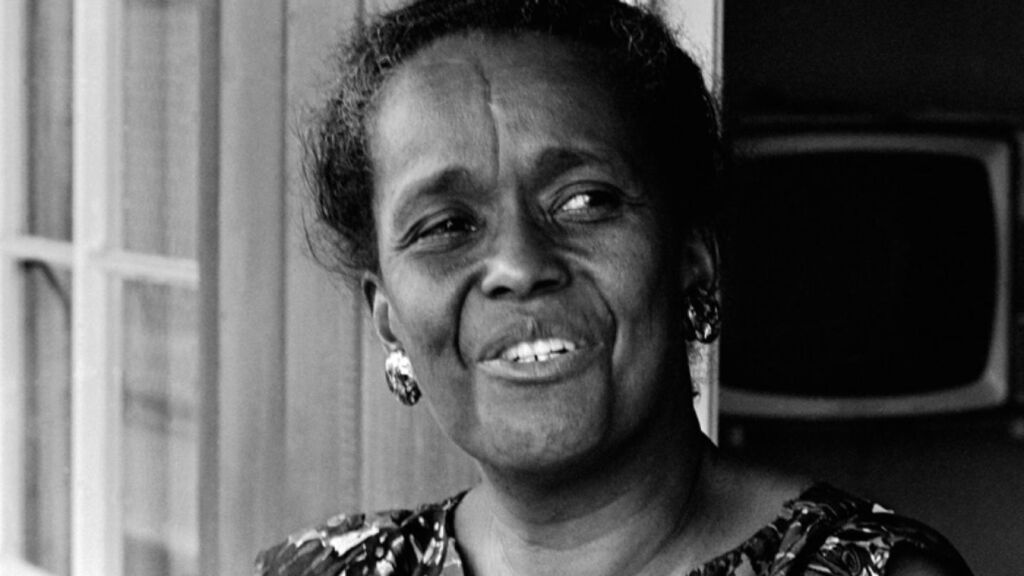
Revisiting Ella Baker & The Black Freedom Movement gives testament that the life of one of the world’s most illustrious ancestors urges us to double down to continue the work.
Marcia Davis is a longtime journalist who lives in Washington, D.C.