
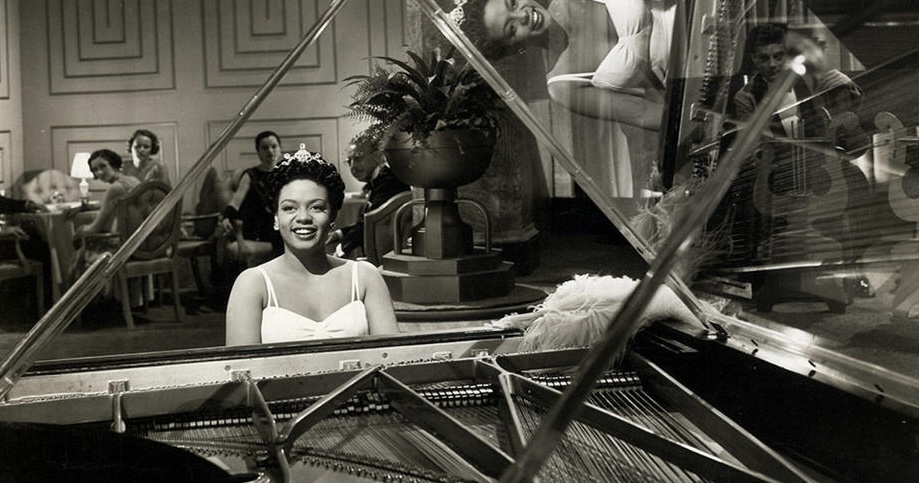
Books don’t just tell stories; they summon us to places we can feel in our bones, maybe experienced before in a past life, an inherited memory, or through spirit. In that way, Karen Chilton’s biography Hazel Scott: The Pioneering Journey of a Jazz Pianist From Café Society, To Hollywood to HUAC calls out, opened doors, stages and whole eras to artistic geniuses.
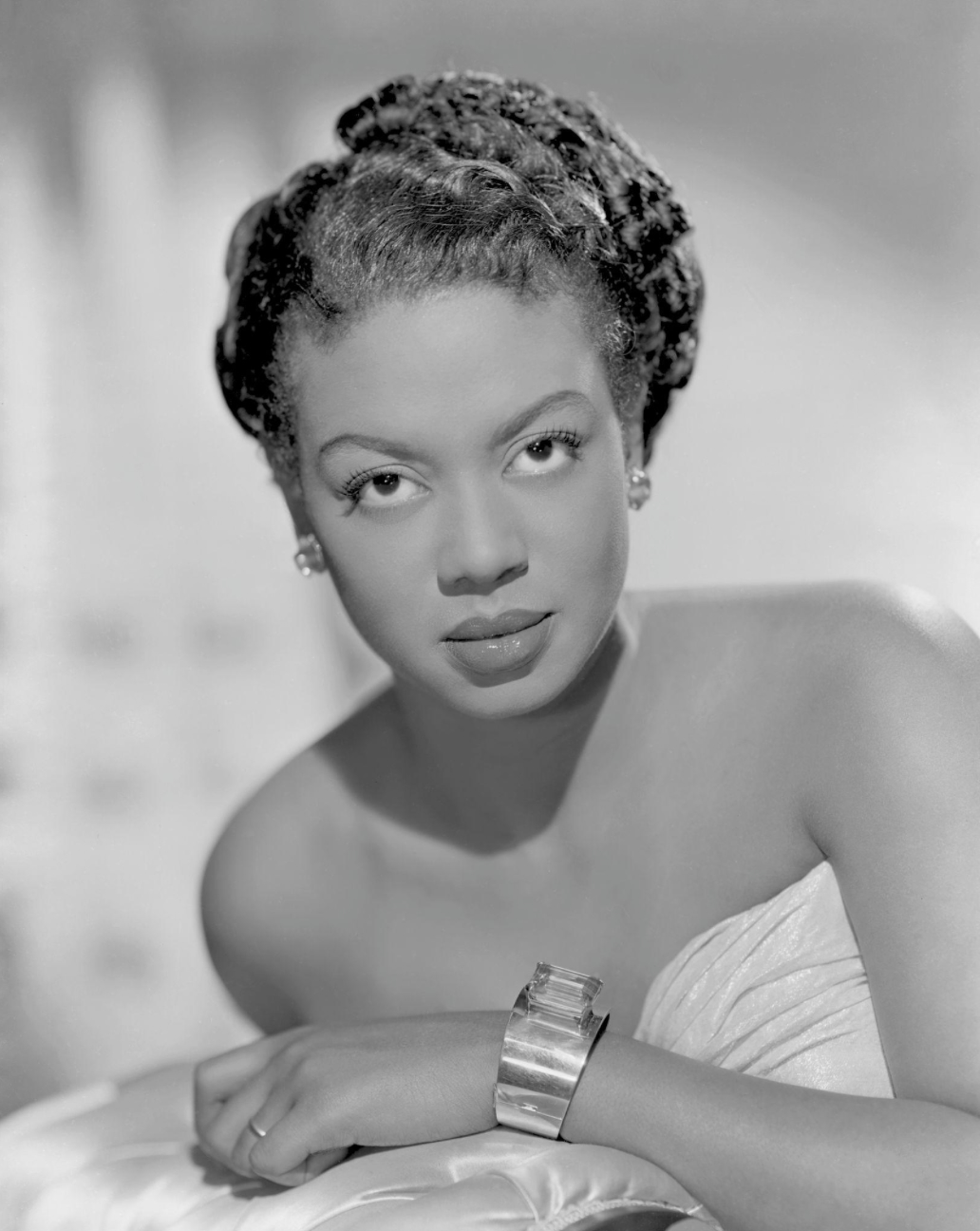
This is not a tidy, feel-good story. It’s a life lesson that showed what it cost Hazel Scott to be brilliant, glamorous, visible, and uncompromising— a Black woman navigating entertainment, politics, and the U.S. government’s appetite for control.
A piano prodigy at eight and the youngest child of that period to receive training at The Juilliard School, Hazel’s genius got misplaced in the telling. Instrumentalist and vocalist – rare for women of that era – she raises the question: What happens when a Black woman refuses to shrink, be managed or be grateful for crumbs?
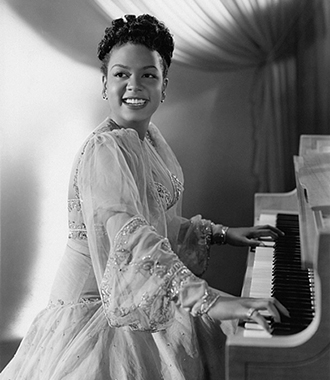
Chilton keeps Hazel Scott in full view: performer, mother, activist, target, survivor. Wife of Congressman Adam Clayton Powell, Jr., she conferred her celebrity upon what was viewed as a coveted power team.
Hazel’s own words, written for her unfinished memoir, set the tone for this biography: “Unworthiness, the greatness that has momentarily been mine, the exalted seconds of genius, the immeasurable depths of apathy. In each day of my life, there has been something of one of these. Whether or not I shall be able to convey, in an interesting manner, certain parts of the kaleidoscopic life that I have lived, I truly do not know. All that I can do is attempt it.”
Danger in the New York entertainment world made her mother Alma Scott keep close tabs, rallying a crew to watch out for the teenager who had captured the adoration of New York’s nightclub world.
There was Scott’s consummate mentor Billie Holiday, assigned to look after Hazel in Alma’s absence. Hazel, at fifteen, was hanging out after hours when one of the guys asked her age. She replied, “Eighteen.” A roar came out of the shadows where Lady Day took off after her with one shoe in her hand and chased her down the street to the subway stop. Hazel finally halted and begged for Billie’s forgiveness.

That story gives you a glimpse of Billie Holiday, more than a guardian in the streets. As Chilton writes, “Nothing was to distract from the impact of the performance.” In a dimmed room with only a spotlight on her face, Billie sang Abel Meeropol’s haunting lyrics, “Strange fruit hanging from the poplar trees.”
Chilton shares the tenderness and terror in the same breath. That woman who could chase a child down the subway steps could also stand under a spotlight and make a whole room face what America did.
Scott didn’t have to imagine proximity to greatness; she was raised in it, already in the room: Hollywood contracts, one of the highest-paid performers of her era, the first Black woman to host a TV show, an American expat adored by Europeans. She grew up calling jazz legends Art Tatum, Fats Waller, and Lester Young family. More than a list of famous names, it’s proof of belonging.

Dignity, Defiance, and the Cost
Hazel was set to kick off her tour on one of Washington’s great stages, Constitution Hall, until the manager called her agent to inquire if the pianist a Negro. When the answer was yes, the date was withdrawn. Hazel wasn’t surprised. She believed Washington was just as segregated as the Deep South and she considered it the height of hypocrisy that the city could trade on power and prestige while keeping Black people out of its most protected rooms. The Daughters of the American Revolution (DAR), did not loosen its ban on Black artists until 1946.
And then came another closed room: the press. When members of the Negro Capital Press Club learned Hazel was scheduled to perform at the Press Association’s annual dinner for President Truman, they became outraged because their membership was banned. Learning that Black journalists were not allowed in the press galleries of the Senate or the House, she sent a telegram canceling her appearance.
Collapse, recovery and what Scott learned as an expatriate in Paris is revealed in the storytelling, exposing how the world watches Black women suffer. Chilton lets Hazel be a person who hit a wall and then climbed back out.
A depleted superstar reached for an overdose and nearly didn’t come back. She’d later learn her status was listed as dead on arrival. She faced the months ahead, not as spectacle, but as recovery, reckoning and a vow to never again sink that low.
Hazel finds the words. She writes that in Paris she learned about people and herself, that you don’t look into the face of death and come away worried about pettiness, gossip and conforming. She grew into a woman choosing life on purpose. Paris is where she knew, without a doubt, that her marriage to Clayton Powell Jr. was over.
This biography helped me understand Hazel Scott as more than a name I’d heard around the edges of other people’s stories. Hazel kept insisting on dignity, in contracts, on sets, on stages, in airports, in headlines, and in her own private reckoning.
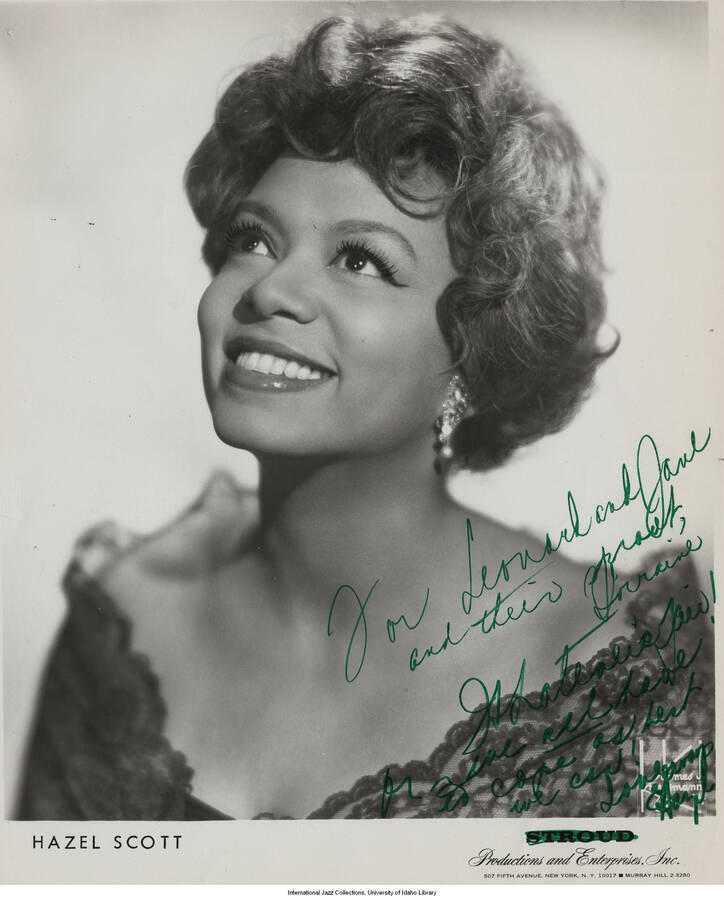
The book is not just about a world-class artist. Her life reveals the depths of Black womanhood and what it takes to keep going when systems are determined to malign you.
Hazel Scott’s story is a fierce reminder that brilliance demands no permission, and dignity is non-negotiable.
Cassandra Brown is a Florida-based storyteller dedicated to elevating the legacies of forgotten trailblazers.