History is not only what we inherit. It is what we choose to remember, to record, and to pass forward.
For Black women, storytelling has always been an act of preservation and resistance—a way of holding onto truth when the official record refused to. From kitchens and classrooms to newspapers, novels, movements, and sanctuaries, Black women have shaped the nation’s moral imagination, often without credit but never without courage.
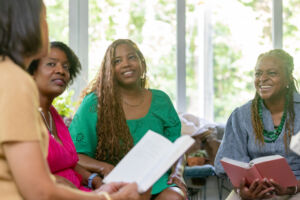
Earlier this year, Unerased | Black Women Speak convened Authors, Activists, Artists Speak! Writing Our Story; Righting Our History, a gathering that brought together writers, organizers, artists, and community members for an afternoon of reflection, conversation, and creative expression centered on the power of Black women’s voices.
Held during Women’s History Month at the Martin Luther King, Jr. Memorial Library in Washington, DC, the program served as both celebration and call to action—a reminder that Black women’s stories are not only part of history, but essential to how we understand freedom, justice, culture, and possibility.
Throughout the afternoon, speakers explored the responsibility of remembering and recording in a time when history is often contested, censored, or rewritten. The conversations affirmed that storytelling is not simply about the past; it is a tool for shaping the future.
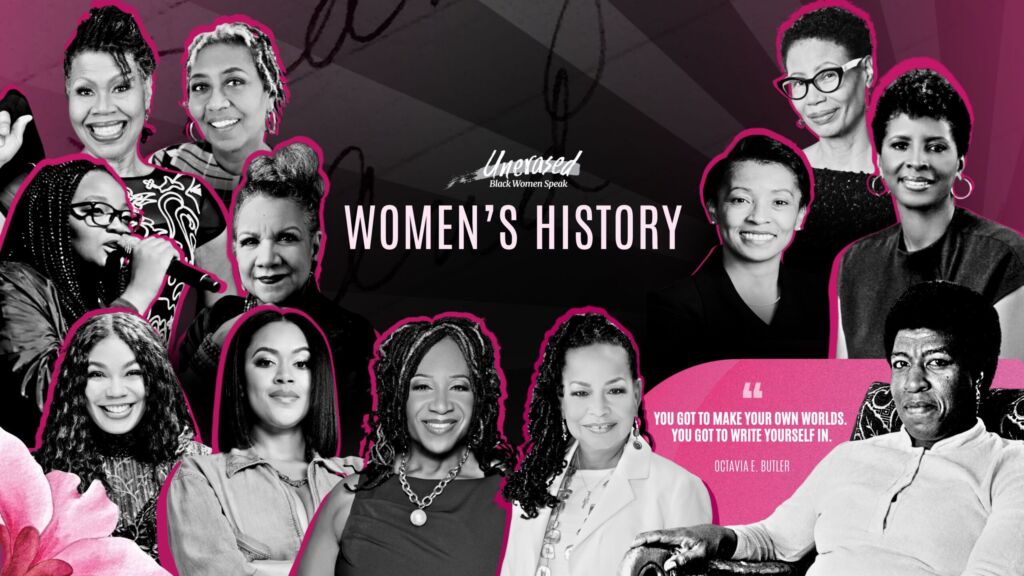
A panel discussion featuring Denise Rolark Barnes, Dana A. Williams, Melanie L. Campbell, and Nina Angela Mercer examined the ways storytelling shapes cultural memory, political power, and collective responsibility. Together, the panelists reflected on what it means to write, organize, and create with intention during times of social and political change.
A series of lightning talks that offered personal reflections, historical insight, and calls to action moved the audience to call and response. Speakers shared stories rooted in family, scholarship, activism, and lived experience, demonstrating the many ways Black women preserve history through their work. These brief but powerful moments underscored that storytelling lives not only in books, but in memory, community, and voice.
Artistic expression anchored the gathering as well. A spoken word performance by poet Ariana Matondo reminded the audience that language is not only written—it is felt, heard, and carried. Her performance created a moment of pause and resonance, inviting reflection on the emotional and spiritual dimensions of storytelling.
The program closed with a conversation between journalist and author Tiffany D. Cross and Joy D. Galloway, President of the Black Women’s Health Imperative. Their discussion reflected on Cross’s book Love, Me – A Letter to Black Women in a Toxic Country, Career, and Relationship, and expanded into a broader dialogue about identity, resilience, and the importance of speaking truth in environments that often demand silence.
Interactive experiences throughout the afternoon encouraged participants to engage beyond the stage. The In the Loop Video Showcase highlighted Black women’s herstory across generations, while the Freedom & Resistance Exhibition, inspired by the work of Nikole Hannah-Jones, challenged viewers to reconsider “The Idea of America” through the eyes of young Washington, DC artists.
Attendees also had the opportunity to visit the Bookshop Station, purchase works by participating authors, and contribute their own reflections at the Storytelling Station, where guided prompts invited participants to add their voices to the historical record.
The afternoon concluded with a tribute to trailblazer Terry McMillan, honoring her lasting influence on Black literature and culture, and recognizing the doors her work has opened for generations of writers and readers.
Authors, Activists, Artists Speak! Writing Our Story, Righting Our History was more than a single event. It was a reminder that history lives in the stories we choose to tell, the voices we choose to hear, and the memories we choose to carry forward.
And as the gathering made clear, the work of writing our story—together—continues.